

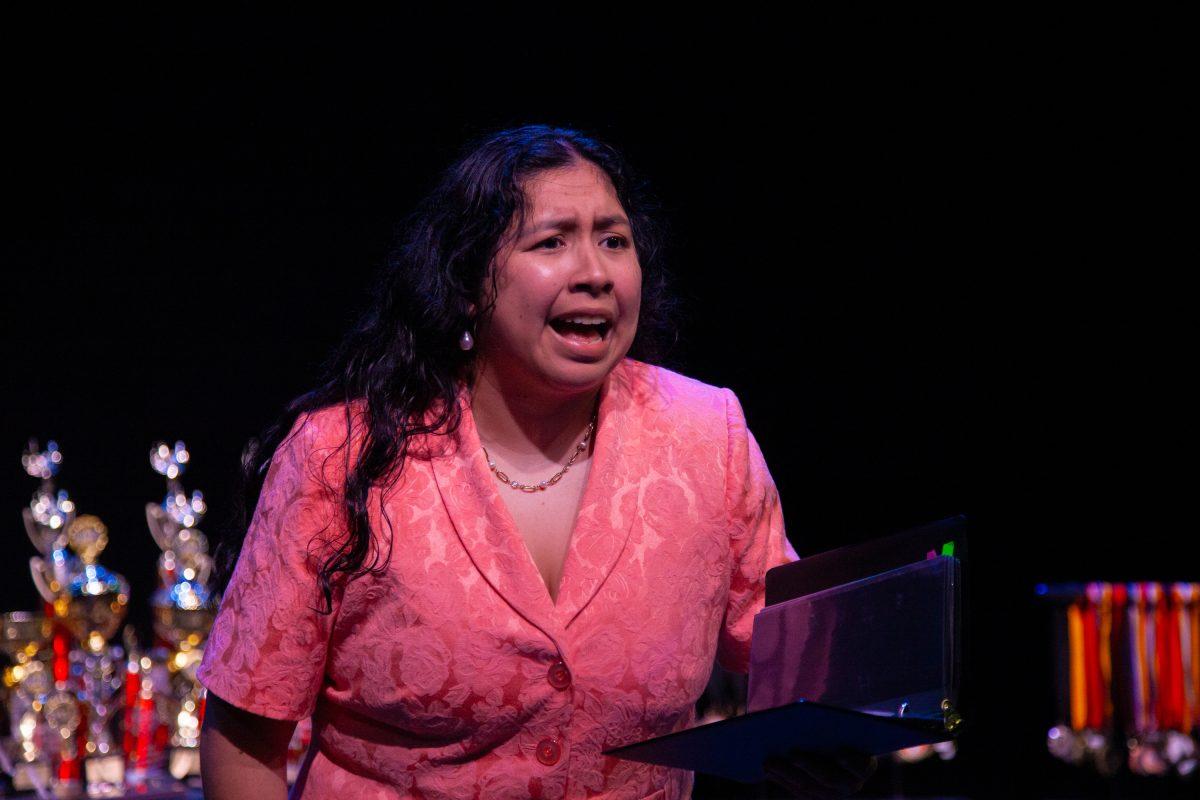
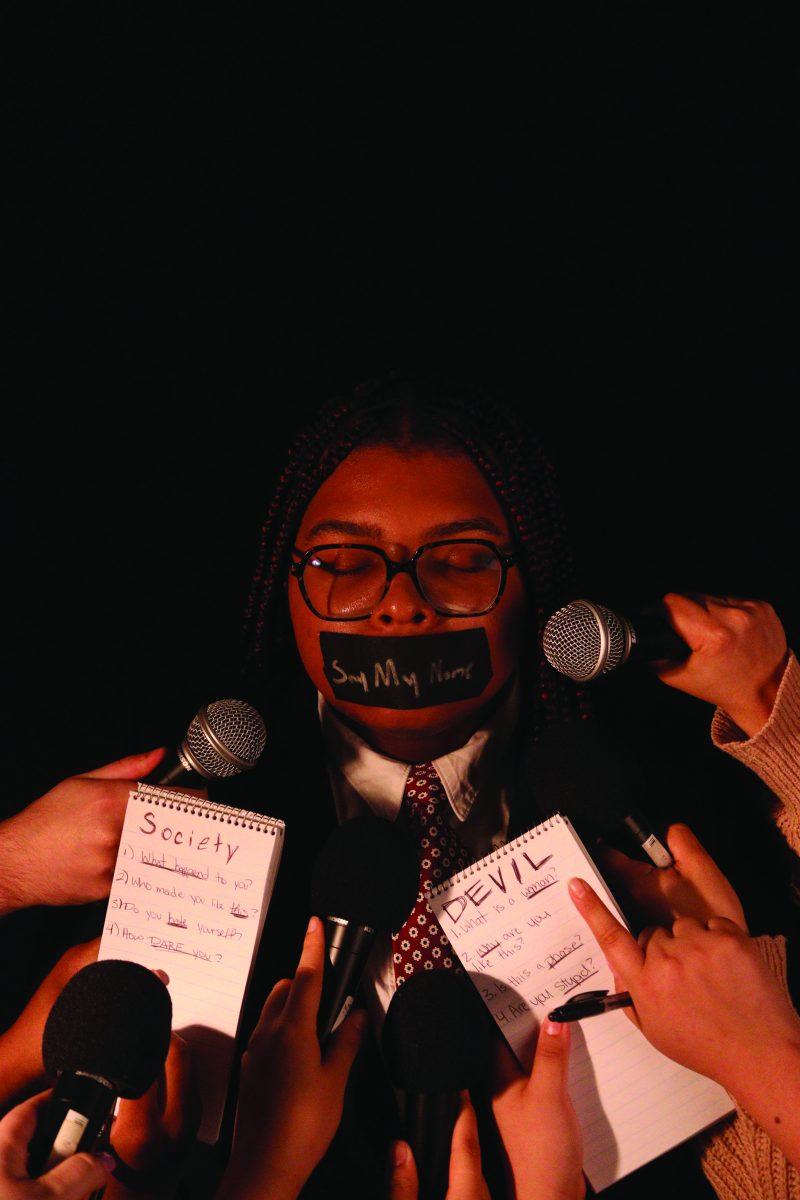


“In the summer heat, a bride glides down a rose-petaled isle looking toward the future seen in the loving eyes of her husband. Time grows slower as if it’s captured with the flicker of a camera. The closer she gets to her partner, the more she sees the details of her lover’s face. The bride’s face bursts with a tearful expression that shows how long she has awaited this moment. Lips quivering with the anticipation of a moment in time sealed with two life changing words, “I do.” The bride arrives to the cream-colored podium that united the marriage of thousands. She lifts her veil to see her future is not a husband, a wife, a groom, nor a bride. The future is her and her alone as a bride with no groom.
Living as a bride with no groom, my friends have become the “yin” to my “yang.”
Asexuality, sociologically defined as not having sexual feelings for others, is so much more than what’s taught in biology. Asexual people like me go through our own version of love that doesn’t involve turning on “I Want to Know what Love Is” by The Foreigner.
For me, love blooms when I water it, by spending time watching differing forms of media and writing the feelings most keep stored far away in their mind.
It blossoms when I find something within myself no one has ever seen before.
Growing up as an asexual person in the church, I felt like believing in God wasn’t meant for a person like me. The same feeling religous people feel about secularity is the same way I felt about existing in religous spaces. It was not that I thought I was above God nor avoiding him. No, it was the way a person like me was never included in Christianity.
Pastors preach in ways that can relate to a general audience of people who are confronting or struggling with something in their life.
I was not the general audience.
My childhood experience with religion wasn’t met by love, relatability or even kindness. It was met with an odd form of hate and pity.
In Black Christianity, my Blackness was labeled as something to be proud of; however, it was a struggle and a topic left avoided in White Baptist Christianity. I was too Black to be Baptist but too queer to be Black. My childhood left me questioning what my place was within religion. My queerness was seen as a struggle in mainstream Christianity and a threat to Black Christianity.
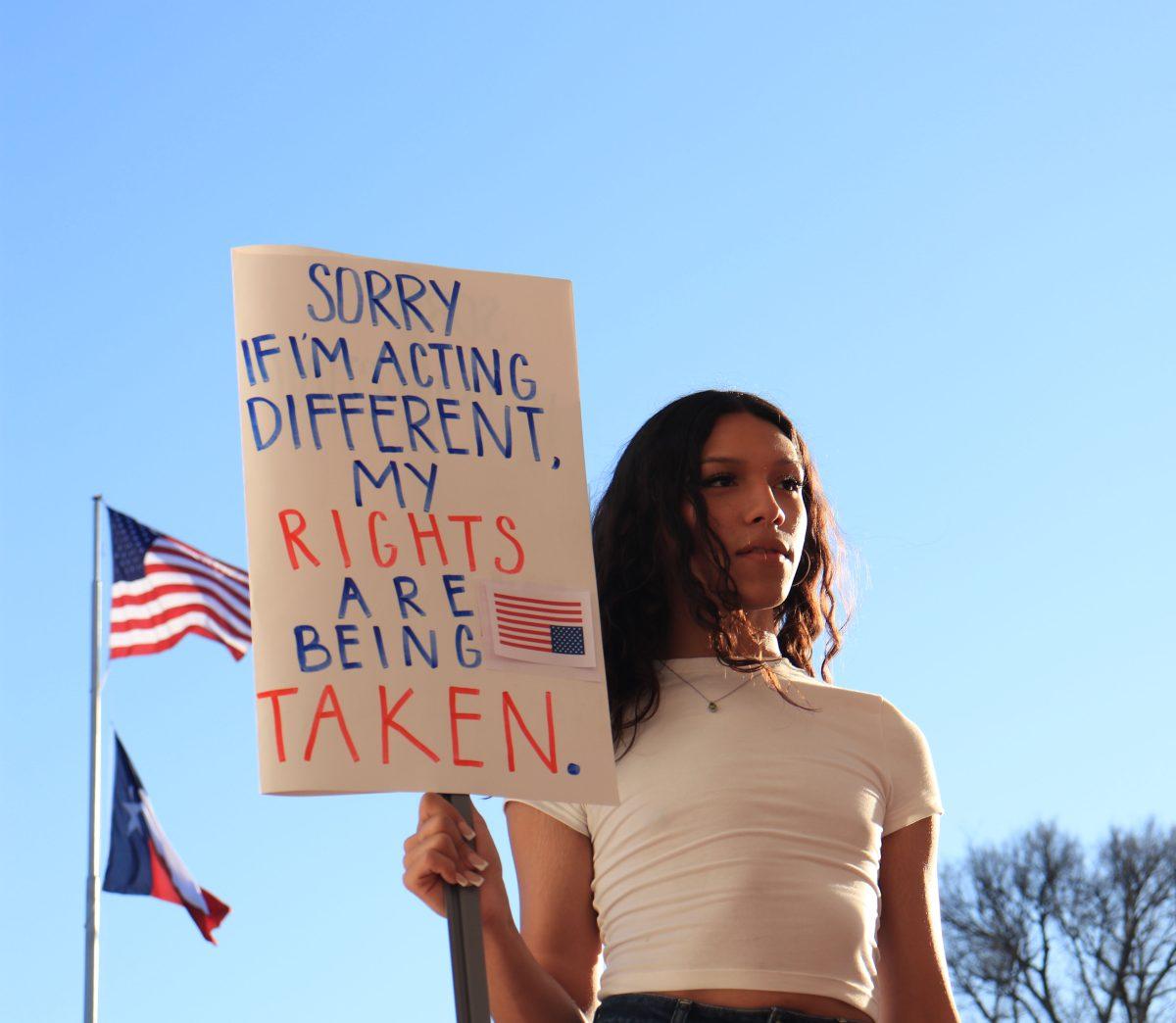
Understanding the intersectionality of being Black, trans, and asexual made no sense to me as a kid. My Blackness tied into my asexuality and my asexuality tied into my transness. I couldn’t be who I am without them.
It took me moving from state to state with a widened view of myself, my love for God, and the love all around me to finally understand:My identity was never a struggle. It’s something to love passionately.
As an asexual person who was raised Baptist, Holiness, and later Evangelical, I have an understanding that my sexuality is not supported or defined within Biblical text. I am left with no groundwork for my own sexuality. My existence as a LGBTQIA+ person in religious environments was filled with the trauma of never belonging. The religion I grew up with didn’t mention the word, asexuality, as a possible way of living nor did my peers. Figuring out my sexuality as a person who believes in God was hard because the only answer I found within existing as an asexual person was a blank page.
I found myself within the blank pages.
Every book has a few blank pages at the end, left with the possibility of a new story to be told through the eyes of the reader. Queer people are faced with paving their own path of faith that isn’t defined by the people around them. We don’t have the same level of biblical scripture about queer love compared to straight people.
There isn’t a derogatory slur that defines the love between a man and a woman.
Nor is there a debate on whether heterosexuality is a sin.
When I was given a blank page, I realized I needed to make the most out of the love within me. For me to fully accept the love God has given me throughout life, I needed to see love was already there and didn’t have to be written on a page.
Love isn’t found at the altar. Walking down the aisle with the lace covering my eyes would only leave me blind. Blind to the love that is already in my life. And more devastatingly blind to myself. I couldn’t see my past, present and future because all I could see was the lace in front of me.
I decided not to run away from myself. Not to settle to be a stereotypical bride. I chose myself amid the standards religion and society set in my path. I ripped my veil off to reveal all the ways love has been there for me. The love I wanted was never the love I needed. It was the love that was all around me. The midnight movie hangouts, afternoon walks, and conversation shared with friends and family were the moments that reminded me of all that I needed.
“As mascara-lined tears stained her ivory laced gown, she notices she is not alone anymore. All the people she has loved before (friends, family, and wayfaring strangers) comfort her with a unified hug along with a statement made in unison “I do.”