



After almost two years of waiting, the moment finally came to watch “Five Nights at Freddy’s 2.” Much to the surprise of this self-appointed movie critic — the movie was both a thrilling but imperfect sequel. “Five Nights at Freddy’s 2” is a film that keeps its audience clinging to their seats, peppered with clever fan service moments that shine on the big screen, but falters in character development and in integrating the game’s lore into its narrative.
Director Emma Tammi confirmed the FNAF movies are set in their own narratives and worldbuilding with some lore being true to its source material and others being separations. The FNAF movies do not need to follow the games religiously as creative liberties can and do enhance the cinematic experience. However, these types of changes are effective when they serve the story, characters, or tension rather than just spectacle.
SPOILER WARNING: This review will be diving deep into major plot details for “Five Nights at Freddy’s 2.” If you have not seen the film consider this your “FNAF 2” music box warning. Reading further is the equivalent of letting the music box timer run down: You WILL be jump scared by major spoilers.
One of the sequel’s biggest expectations was the element of horror and Five “Nights at Freddy’s 2” not only met this bar but ran with it. After criticism due to the first film’s lighter take on horror, Tammi promised a more thrilling and chilling experience and truly delivered.
Horror is woven throughout the film from classic game-inspired jump scares to tense point-blank moments that kept the audience on the edge of its seats. Watching it in theaters elevated the experience. I went with friends on my birthday, and from the first fake out scare, I was shrieking. My best friend was grabbing onto me for dear life. My other friend scattered gummy worms, and the entire audience was catching their breaths. This continued the whole night with shriek after gasp filling the room making every scare hit harder than the last. Unlike its predecessor “Five Nights at Freddy’s 2” maintains a relentless sense of horror and suspense. Before the first scare, the buildup is meticulous through scene set up, lighting, and sound design making every step a character takes feel like impending doom, turning the film into an immersive ride.
After knocking it out of the park with horror, the next major expectation was lore. Like a parent explaining their divorce to their child or someone explaining their relationship with their online Canadian boyfriend… It’s complicated. On the surface the Easter eggs sprinkled throughout the film were perfectly executed, rewarding lifelong fans with references that felt earned instead of forced. From Shadow Bonnie’s eerie split second appearance, the full breathtaking reveal of Circus Baby during Vanessa’s dream sequence, to the Marionettes’ chilling “I don’t hate you but” speech, these moments did not feel like shameless fan service, but a reminder of this franchise’s long history, showing its appreciation for the lifelong fans who have kept the franchise going.
While the movie excels at smaller woven entries, the film’s handling of the larger narrative lore points was far more unsteady. It created bold, emotionally driven, and at times, frustratingly divisive lore choices. Starting from the beginning, the film makes major lore decisions that reshape the narrative arc for the film and franchise. The best was finally seeing the colorful Freddy Fazbear’s Pizza in full swing with parents chatting idly, children celebrating their birthdays, and an eerie sense of normalcy that makes the impending horror feel more rewarding.
For the first time in the franchises ’history, audiences are given the opportunity to witness these horrifying events in full, rather than through pixelated mini games or fragmented dialogue. This shift adds a layer of reality to the situation surrounding Freddy Fazbear’s, building a clearer narrative of how and why everything is happening in a way the games have never depicted.
This clarity extends further when we’re given a look at serial killer William Afton in his formidable hunting ground. Seeing how Afton in his Spring Bonnie suit was able to commit his murders completely undetected transforms him from a mythic figure into an active psychopathic threat. The film, unlike the games, shows in detail how Afton operated, offering one of the most unsettling insights the franchise has provided into how his crimes were able to occur in plain sight.
While this was a compelling and much needed expansion to the franchise’s visual and narrative world building, the film’s most divisive lore decision comes with the death of Charlotte Emily. In the games, we see Charlie’s death come when she is cruelly locked outside of the original Freddy’s pizzeria by her peers and brutally murdered off screen in the back alley by William Afton. The film pivots this giving Charlie a new gut-wrenching death we see unfold. While trying to save another child from Afton, Charlie is stabbed three times in the back, collapsing onto and into the marionette stage due to the negligence of the adults surrounding her. This version of Charlotte’s death was utterly devastating and narratively consequential, with the reimagining deepening her connection to the puppet and emphasizing her isolation from her peers and her tragic sacrifice. However, this change also completely switches her story arc by transforming her from a tragic protector into an antagonistic presence whose anger extends beyond Afton alone.
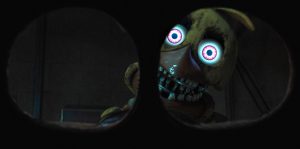
Following this impactful change with Charlotte, the film’s handling of the withered animatronics offers another point of contention. In the games, these damaged horrors are all that is left of the original Freddy Fazbear and his crew, left abandoned in the backrooms to decay or better yet… wither away (you see what I did there). In the movie, the Withers are presented as a completely new or an
older and separate gang of murderous animatronics. They appear primarily as a tense and antagonistic escalation to Mike’s hacking escapade and then quickly are written off. While visually stunning this choice left the Withers feeling more as filler meant to keep their brief screen time chilling without offering any real reason or characterization. This undermines the narrative potential they carry in the games, missing an opportunity to bridge the events of the first movie with the sequel.
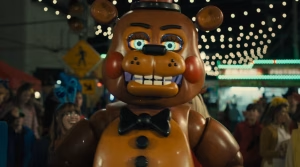
This issue extends to Toy animatronics. While a longer screen time and a slight bit more narrative, they felt highly underutilized and bluntly speaking misused. Though they are among the franchise’s most recognizable and beloved characters, in the movie they are used as mechanical puppets rather than fully recognized figures within the story. Their presence in the second half creates a high risk, tension filled atmosphere, but the film highly misuses their significance. These decisions illustrate the ongoing struggle the film directors face when trying
to mix cemented lore with new narrative decisions. While bold and innovative in certain areas, visually and emotionally hitting in others, they stay consistent in their inconsistent execution.
Characterization stands as some of the biggest changes in the film and is as layered as its lore. Charlotte and her character as the marionette dominates the story driving forward a lot of its emotional stakes and horror. The film reimagines her as the central antagonist, capable of possessing both the animatronics and human characters that cross her path, an extremely dramatic departure from her portrayal as a tragic guardian and protector. While this creates tension and supernatural thrills, it raises several continuity questions, as her powers conflict with lore about the ability of the souls possessing the suits and just how far the supernatural aspect of FNAF ties in with its robotic nature. Despite these issues in continuity, Charlie remains the emotional heart of the film with her isolation and sacrifice and twisted sense of justice given a new antagonistic light.
Micheal Afton, in a surprising contrast, emerges as the film’s surprise twist villain; a once again an extreme but effective departure. Though his screen time is limited, his transformation into a psychotic calculating figure following in his father’s footsteps, gives the narrative an unexpected gut punch that sets up some amazing story directions for the upcoming films. His role demonstrates the filmmakers ’correct handling of reinterpreting a well known protagonist for cinematic purposes.
In comparison, Abby struggles as a likable protagonist, with most of her decisions driving and creating trouble. Her obsession with her *friends.* The repeated decision to return to Freddy’s despite the clear danger she and her brother had already gone through makes her a frankly whiny and selfish character whose reckless decisions turn her more into a plot device to drive the conflict and tension forward rather than an interesting character.
Finally, Henry Emily in one of the most devastatingly minor roles. William Afton’s former business partner, creator of some of the franchise’s most loved animatronics, and father to a murdered daughter at his own practice had the potential to be a central plot point in exploring Freddy’s history and deepening its worldbuilding. Instead, he is largely underused only being truly relevant when he gives Mike the music box to put his puppet daughter back to sleep. Also when he leaves a message for Mike in the end credits revealing himself as Afton’s partner, a fact that was already stated and emphasized in the movie, supposedly killed in the post credits. His knowledge and emotional weight leave audiences with only a fragment of the significant character he is.
Taking all of these factors to heart, “Five Nights at Freddy’s 2” is exactly what it was promised to be in certain aspects and frustratingly imperfect in others. Horror without a doubt is this film’s strongest narrative element and achievement. It created a scene of pure dread and tension, setting its viewers in the front seat of an emotionally invested rollercoaster with no cues of what’s coming next. Lore meanwhile is more of a mediocre up and then down slope. The film rewards longtime fans with perfectly executed Easter eggs and beautiful sequences like the pizzeria in its prime or the horrifying reality of Afton’s years of psychopathic murders. Yet it falls flat in other choices such as Charlotte’s powers of control, the use of the Withered and Toy animatronics, and the complete underuse of Henry. This creates inconsistencies and problems within the continuity that prevent the movie from reaching the peak of greatness. Characterization follows this front with Charlie and Micheal leaving a lasting impression in contrast to Abby and Henry who served more a device to move the plot forward than actual characters you want to root for and follow on their journey.
Putting all of this together, the film is a thrilling and ambitious entry into new territory for the franchise, but like its predecessor stays inconsistent in its execution leaving unanswered questions and unresolved conflicts that continue to linger even two months after its release. “Five Nights at Freddy’s 2” did not meet every expectation that was laid out for it, but does enough to keep its invested audience on edge and wanting more.