

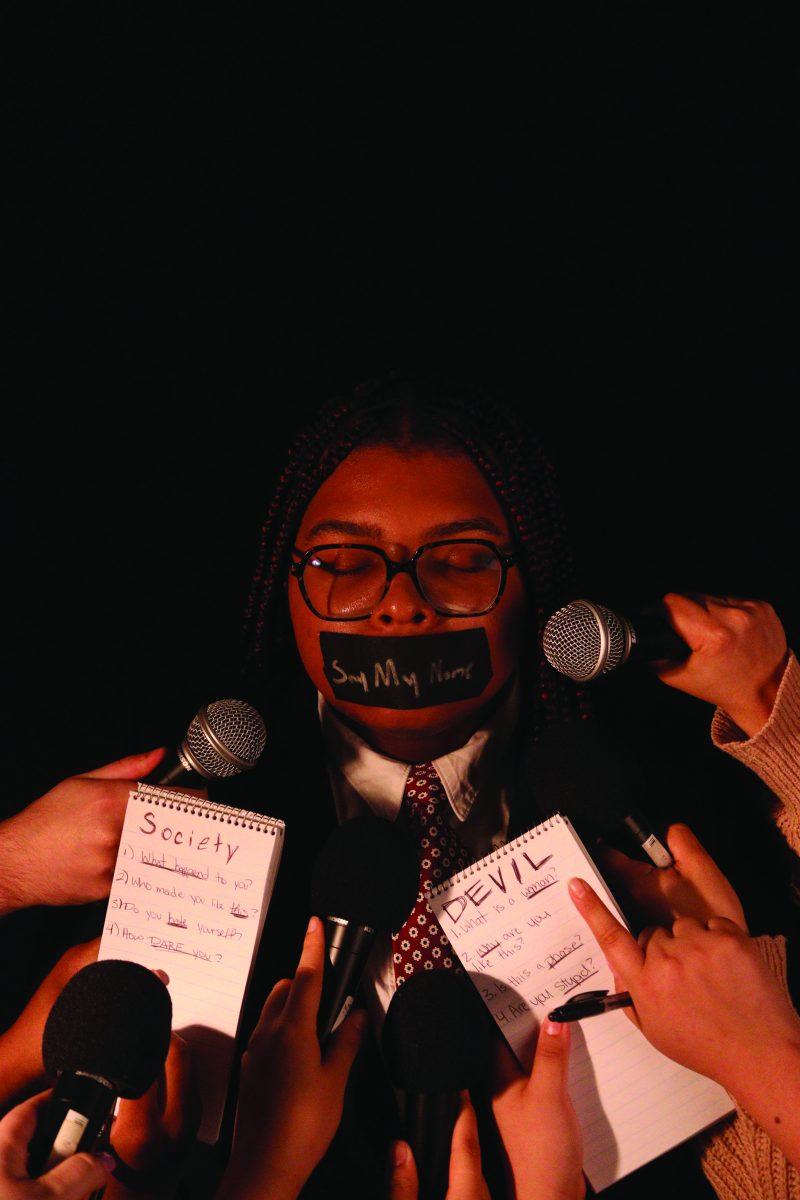


While speaking at Utah Valley University in Orem, renowned conservative activist and founder of the conservative non-profit activist organization, “Turning Point USA,” Charlie Kirk was shot and killed. Some were devastated at this news, sending their hearts out to his family. Others were in a state of celebration now that their political enemy No. 1 was dead and gone with some going as far as saying he deserved everything that was coming to him. Some, despite their disdain for Kirk, felt the taking of his life went too far. Personally, I was left with a different perspective all together. “Why?”
What surprised me was not just the fact of Kirk’s death, but how differently people perceived him in life versus death. This is where I was struck with a dilemma that pivoted from Kirk’s death and more into our society as a whole.
“When did free speech begin to warrant violence?”
During my interview with Amanda Ratcliff, faculty adviser for Turning Point USA at TJC, she gave a haunting visual of the subtle ways our society has normalized silencing dissenting ideas. Ratcliff noted even smaller actions on campus, like tearing down fliers or vandalizing signs, “aren’t a threat of violence, but if that isn’t addressed, it could eventually become a threat of violence. If people get comfortable shutting down the speech of someone, they don’t like they get more emboldened to take that further,” Ratcliff said. She saw this as an erosion of free exchange, stating the “willingness to just shut down other people’s speech sets a dangerous precedent, and we’ve got to be careful about that.” From this point of view, mockery or insults do not justify retaliation in any form.
A person may die, but their words and actions persist in the minds of others. Kirk’s death did not erase his voice — it transformed it. He continues to influence ideas, elicit introspection and responses through discussions, recollections and continuing arguments. An ideology cannot be silenced by the physical act of death; it merely changes how the living perceives and decides to carry it out in their lives.
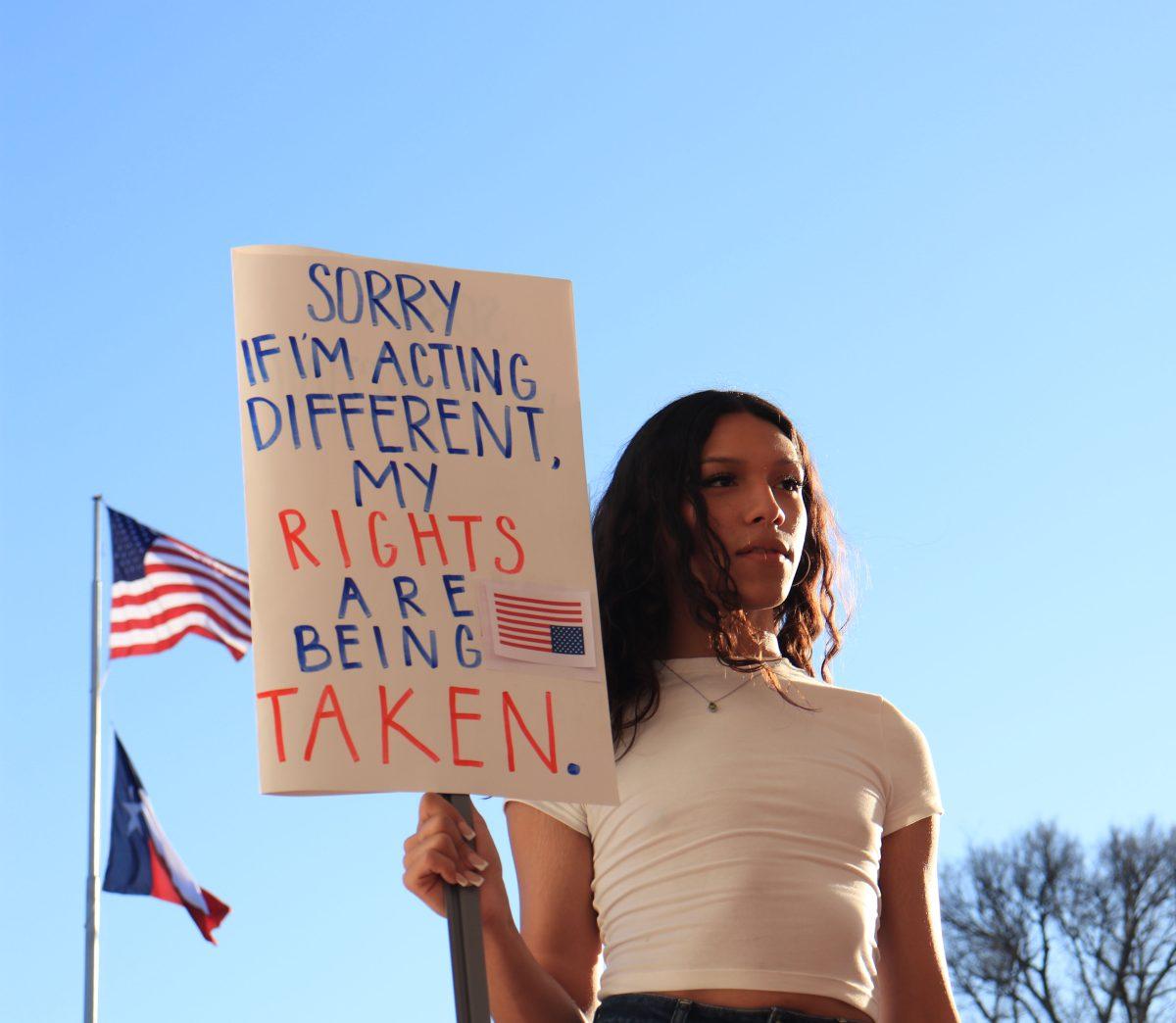
In a society where our free speech is becoming increasingly challenged not only by our government but also by social pressures, we as a whole are drowning in constant conflict, tragedy, and political tension. In this festering pool of darkness, we are allowing anger to mutate itself into violence. Within this, the normalization of violence surrounding disagreements is becoming an alarmingly increasing trend. In a survey given by the Foundation for Individual Rights and Expression between Jan. 3 and June 5, 2025 “Out of 68,510 students surveyed, 34% of college students believe that using violence to stop someone from speaking is acceptable at least in rare cases.”
We have reached a dangerous period of time where almost any debate is considered a personal attack, and in some cases such as Kirk’s, this mindset can lead to extremely deadly consequences. While Kirk’s death served as a catalyst, examples of this have been shown across the nation.
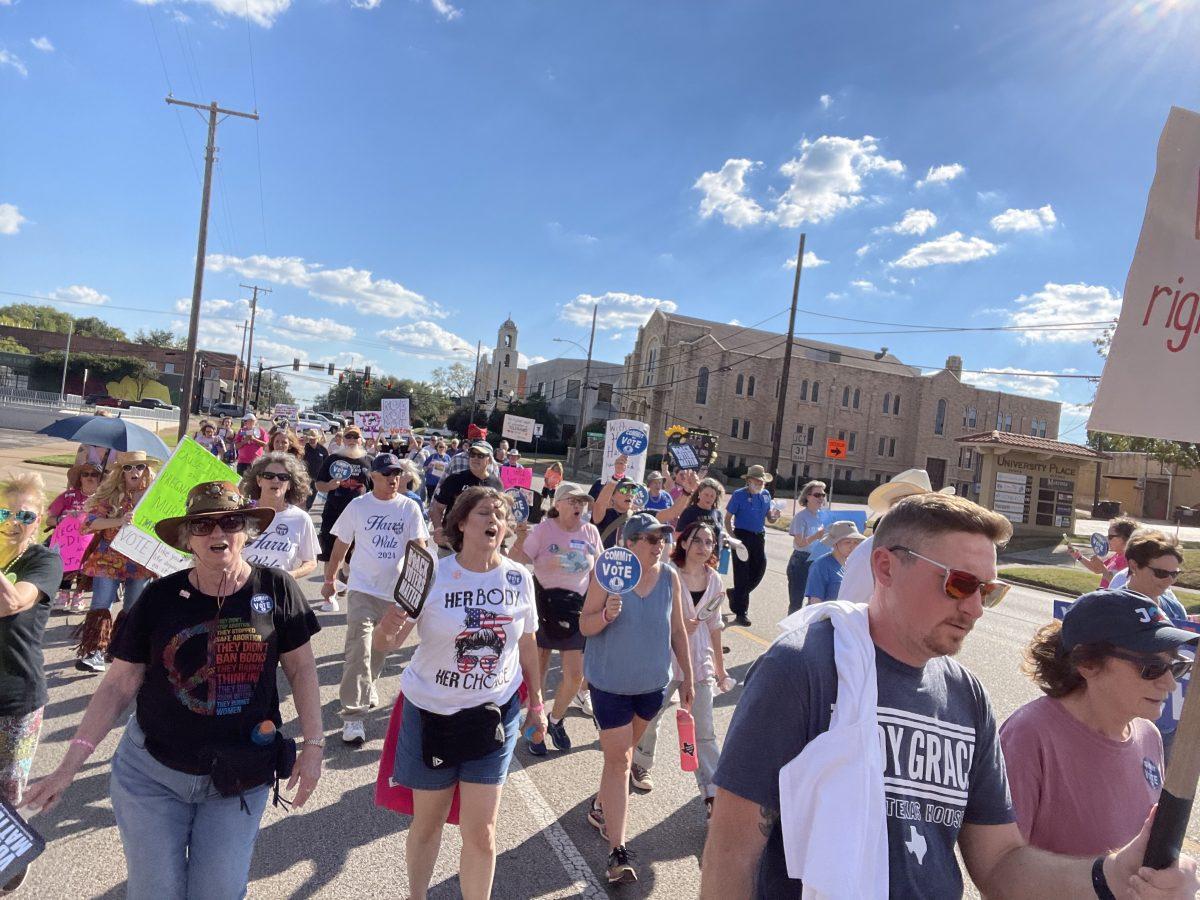
Take the 2017 protest of controversial far-right commentator Milo Yiannopoulos at the University of California, Berkley, as an example. Invited to speak by the Berkeley College Republicans as part of a campus event promoting free speech, hundred of students gathered peacefully to protest his controversial rhetoric. This event quickly spiraled out of control with the reported arrival of 150 masked agitators who began setting fire causing $100,000 in damage across campus. Yiannopoulos’ had to be quickly removed and his event canceled after six reported injuries.
A more recent example is the 2024 UCLA pro-Palestinian campus occupation. A pro-Palestinian student encampment was attacked by a large group of counter-protesters leading to a violent fight that lasted throughout most of the night. There were a reported
15 injuries, 173 arrests, and major property damage.
Exposed through these tragedies is the increasing pattern of violence and desensitization with the main theme of silencing free speech.
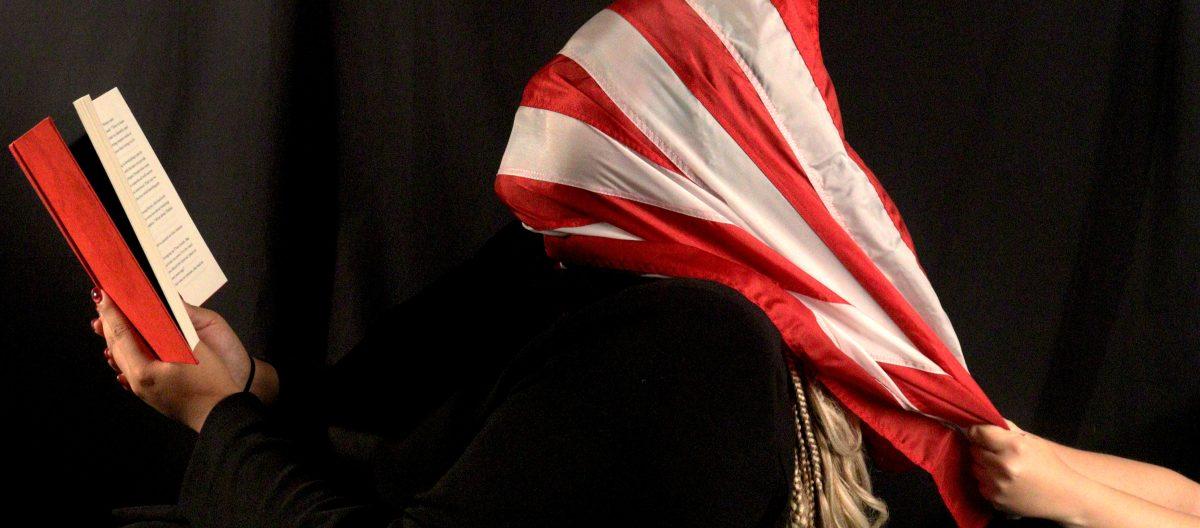
A debate is meant to serve as a civil argument of ideas with both parties meeting with clear and concise arguments. Not violence. This is something I feel we have completely lost to time. We live in an era of fear where silence among differing opinions is all too often censored not only by others but by ourselves. Self-censorship as defined by the Miriam Webster Dictionary is “the act or action of refraining from expressing something that others could deem objectionable.” According to a 2020 study by the Washington University in St Louis, “some 40% of Americans were found to self-censor out of fear of repercussion.” Fear of social, academic, or in extreme cases such as these physical repercussion has led to a massive silencing of opinions, debates, or even simple thoughts to avoid the risk of persecution and ostracization. For years we have fought for free speech, yet we contradict ourselves by silencing the ideas that challenge our own.
We choose to silence ourselves because frankly it is the safer option. The moment we began choosing silence to avoid physical and social ostracization, was the moment society as a whole began tumbling downhill into this dark pit we now call home.