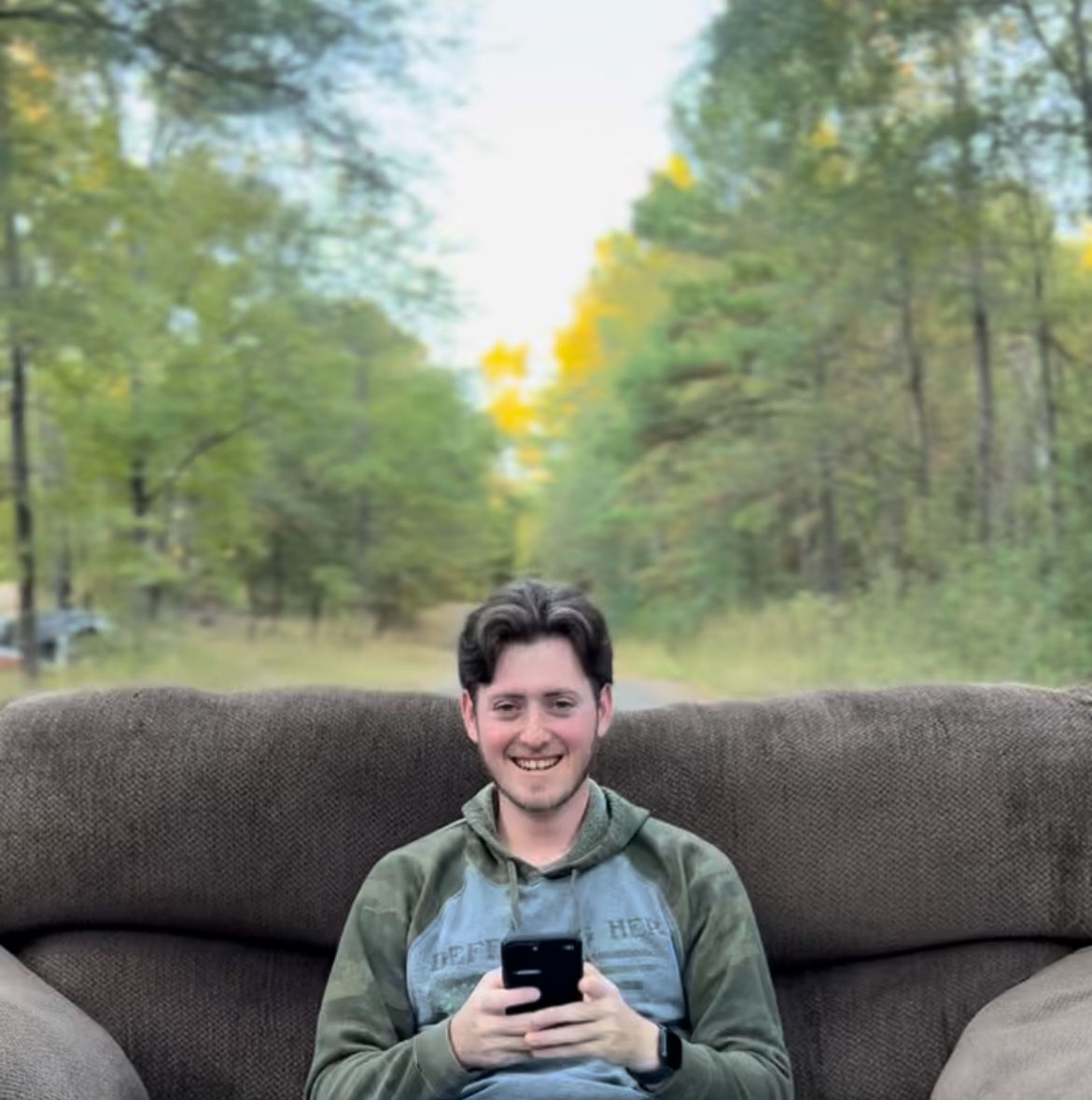





For the first time, students from Tyler Junior College’s Game and Simulation Development program participated in Chillennium, a 48-hour student-led game jam at Texas A&M University. The TJC team, Elijah Chaffin, Tyler Mellor, Audrey Skipper and Blake Frazier, won Best Visuals for their game “Paper-Jam.”
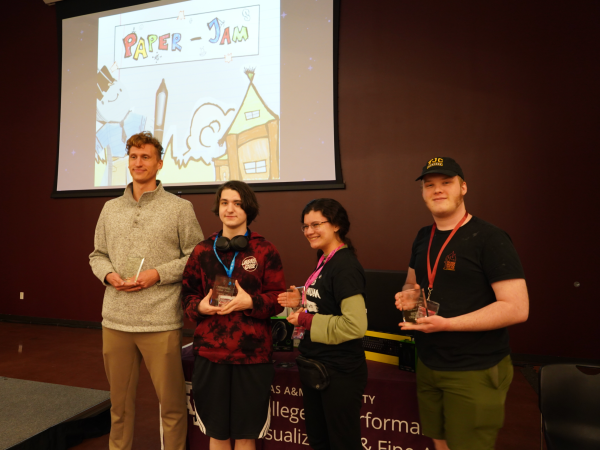
Department Chair Justin Sullivan expressed his pride in the students’ initiative.
“I usually just put a post saying, ‘Hey, look, get involved in game jams, because these are really good to get into the industry,’” Sullivan said. “But this is the first year any of the students actually took me up on the offer so it was all their initiative. I just give them information. I say, ‘If you want to do it’ and they did it on their own.”
Winning an award in their first year was especially meaningful because of the strong competition. Sullivan recognized the challenge of competing against four-year schools, some with students who continue to return year after year.
“It’s unexpected. Very significant because, not that TJC is not a great school or anything, it’s just we’re only a two-year program,” Sullivan said. “And then, they’ve never done it before. So imagine you’ve done this four times, you feel a little more comfortable doing it. But if it’s your first time, you’ve got to figure everything out.”
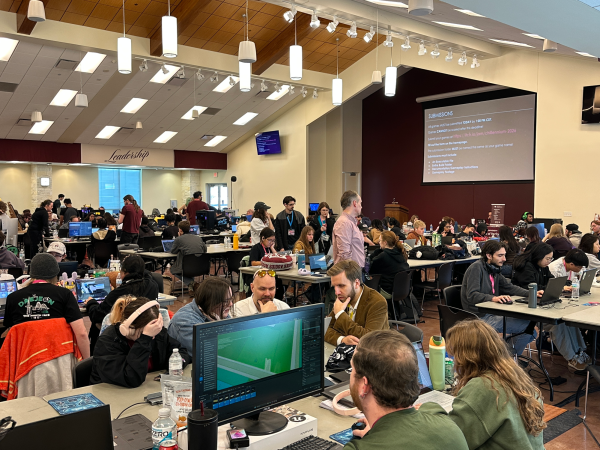
Chillenium is a student-led “game jam” where students from around the world gather and compete to create a video game in 48-hours. Chillennium took place Feb. 20-22. Chillennium’s worldwide reach and strong ties to the gaming industry also make it stand out from other competitions.
“It’s better if you can find something that has industry affiliation,” Sullivan said. “The program here at Chilleninium has the best, like all the big studios, Insomniac, Epic Games, big studios, big names, Electronic Arts, which is very significant. That’s different, most game jams can’t do that. Most competitions just can’t have that kind of leverage.”
For TJC sophomore Tyler Mellor, the experience was positive.
“It was my first game jam. I’m very excited that I was there to represent TJC, especially since, you know, we actually won a thing, which is something I didn’t expect,” Mellor said.
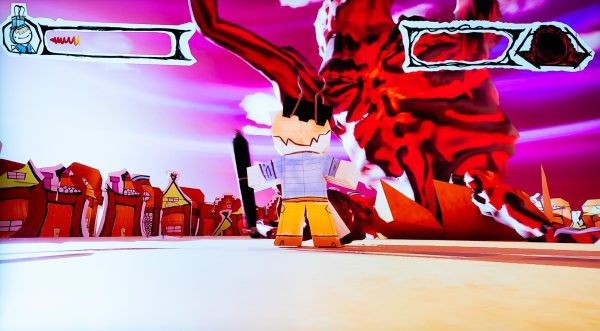
Mellor’s team created “Paper-Jam,” a game with a unique paper-style look, using paper looking textures and animations. The team worked together across different skills, which combined drawing, 3D modeling, animation and coding.
Mellor described his role within the team.
“There were four of us. I was on texture, concepts, and UI (User Interface), and some sound stuff,” Mellor said. “UI is HUDs (Heads-Up Displays), little buttons, menus, health bars, that kind of stuff.”
Audrey Skipper, a sophomore graphic design student, spoke about the personal growth that came from competing.
“It felt amazing, like an honor to just put myself out there… I’m not confident of putting myself out there for this huge competition but as soon as I got there, I was like, OK, I think I can do this, you know, with my team.”
Skipper created 3D models for “Paper-Jam”, which focused on a theme of artists versus artificial intelligence.
“I kind of thought about the idea, and we just went for it because why not? We did art versus AI because I think that’s a huge issue nowadays with our exploiting artists and, you know, musicians and everything else,” Skipper said. “Even though AI is like a huge thing now, you know, and we seem like super small against it, we’re still drawing, despite everything, we’re still working on our thing, we’re still putting our work out there.”
Both students said the competition’s fast pace felt similar to working in the real world.
“Anyone who’s done school and then graduated and actually done the job, they realize there’s a lot of differences,” Sullivan said. “After 30 hours, you’re dead, it’s so hard to keep going and then it’s like, no, I’m going to push through. I’ve got to finish this. There’s no next week. There’s no kicking this. There’s no I’ll just take the zero. Yeah. It’s all or nothing. So it’s just like the industry. Yeah. Very aligned.”
Despite challenges such as tight deadlines and some students feeling sick during the event, TJC’s teams succeeded.
“Game jams are amazing. I would love to do more,” Mellor said. “It was a lot of work, a lot of sleepless nights, but I got something out of it.”
Skipper agreed and highlighted the teamwork.
“We pulled it off surprisingly,” Skipper said. ”I felt proud of myself like I finally, you know, put myself out of the shell.”
For Sullivan, the win shows how strong the program is compared to larger universities.
“Out of all the teams, maybe 100 teams, only 66, after everything, were even able to finish a project, which is a huge accomplishment,” he said. “So right there, you’re in the top 66 because the rest of them didn’t even get to that point where they could finish a project, and then to finish the best visuals. As a visual artist, I would be very happy to win that award because, I mean, that’s the one you want.”
With plans to continue encouraging students to compete, TJC’s first success at Chillennium could be the start of a new tradition for Game and Simulation Development students.
“I will post it every year. Yeah, and I’ll keep encouraging it,” Sullivan said. “I’m very proud of the teams. They did a fantastic job.”